




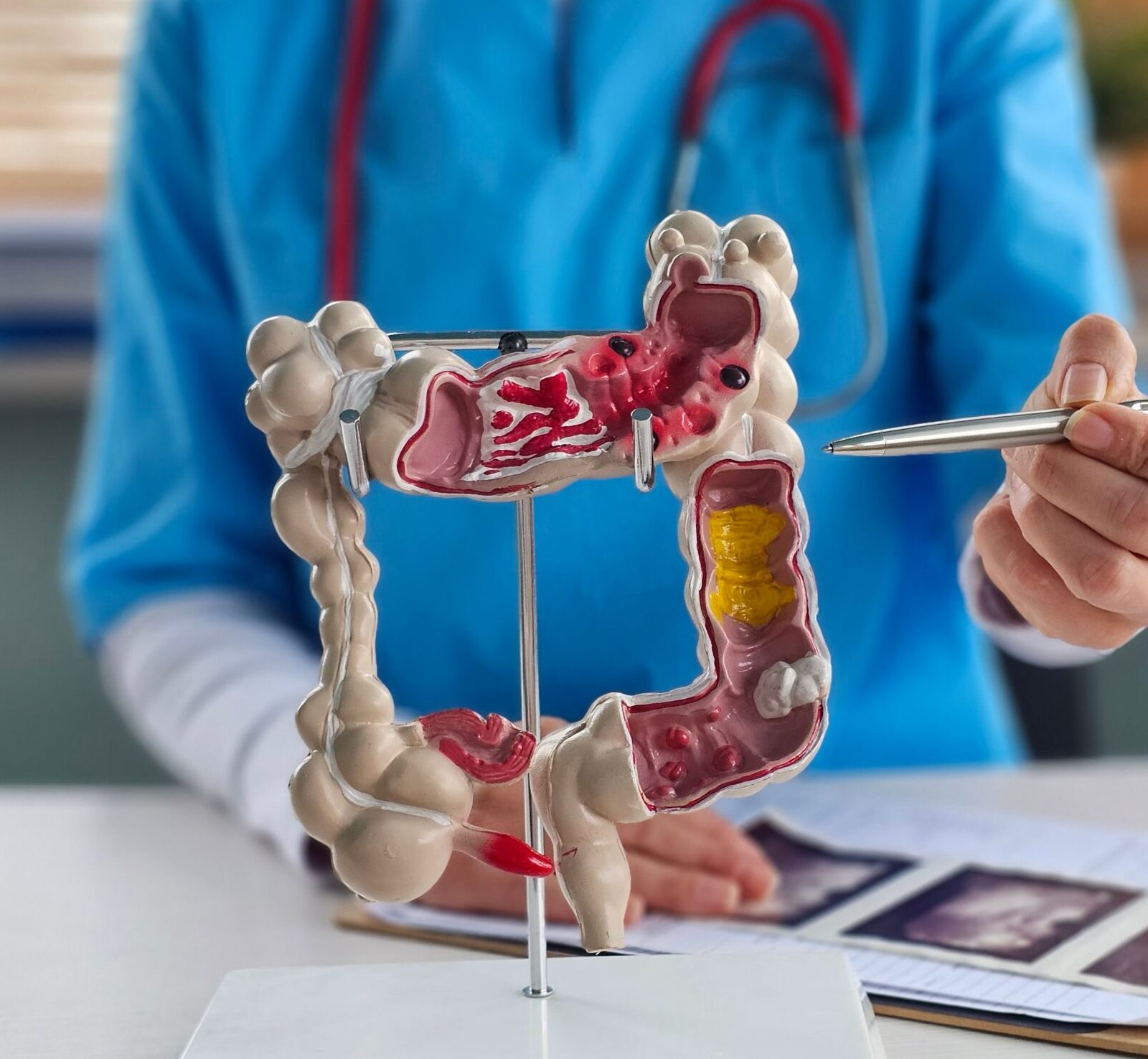
Understanding inflammatory bowel disease colorectal cancer risk is one of the most important steps a patient with Crohn’s disease or ulcerative colitis can take for their long-term health. Living with inflammatory bowel disease (IBD) brings daily challenges, and it is completely natural to have questions about what your diagnosis may mean for your future. Research suggests that patients with IBD face a modestly elevated risk of developing colorectal cancer compared to the general population, and that regular surveillance and open communication with a specialist can make a meaningful difference in early detection. This page is designed to help you understand the connection, the factors that may influence your personal risk level, and the screening options available to you. To speak with a specialist, contact our team directly.
If you have questions or would like to schedule a consultation, please reach out to our office for details.
How Inflammatory Bowel Disease May Influence Colorectal Cancer Risk
The relationship between inflammatory bowel disease and colorectal cancer risk is rooted in the biology of chronic inflammation. When the lining of the colon or rectum experiences persistent inflammation over many years, as it does in both ulcerative colitis and Crohn’s disease, cellular changes may develop over time and contribute to colorectal neoplasia. Research suggests that this prolonged inflammatory environment can, in some cases, contribute to abnormal cell growth in the colon or rectum. Some patients have an increased risk, while others may face a lower risk depending on disease features and monitoring.
It is important to keep this in perspective. Not every patient with IBD will develop colorectal cancer, and many factors appear to influence individual risk levels, which is why specialists use risk stratification to assess those differences. That said, being informed helps patients make proactive decisions alongside their care team.
Factors That May Affect Your Personal Risk Level
Several variables may influence inflammatory bowel disease colorectal cancer risk on an individual basis:
· Duration of disease: Research suggests that risk may increase after eight to ten years of active IBD, particularly when inflammation has been extensive.
· Extent of inflammation: Patients with inflammation affecting a larger portion of the colon may have a different risk profile than those with more limited disease, and crohn’s colitis may warrant the same careful discussion of risk as extensive ulcerative colitis.
· Severity and frequency of flares: Poorly controlled severe inflammation over time is associated with a higher likelihood of cellular changes.
· Family history: A personal or family history of colon cancer may be a relevant factor to discuss with your provider, and risk may not be the same in male patients and female patients.
· Presence of primary sclerosing cholangitis: This liver condition, sometimes associated with IBD, may further influence colorectal cancer risk.
Understanding your specific situation requires an individualized conversation with a board-certified colorectal surgeon who has extensive experience evaluating IBD patients. Other risk factors can also shape a person’s overall profile, and a previously diagnosed episode of low grade dysplasia places a patient in a more concerning category.
Surveillance Colonoscopy: A Key Tool for Managing Inflammatory Bowel Disease Colorectal Cancer Risk
One of the most effective strategies for monitoring inflammatory bowel disease colorectal cancer risk is regular surveillance colonoscopy. Current gastroenterology guidelines generally recommend that patients with IBD involving the colon begin surveillance colonoscopies approximately eight to ten years after their initial diagnosis, with follow-up intervals determined by their provider based on individual findings.
During a surveillance colonoscopy, the physician can visualize the lining of the colon directly, take tissue samples (biopsies) from areas that appear abnormal, identify precancerous lesions, and detect early signs before cancer develops. Early detection through consistent monitoring is widely regarded as one of the most important factors in favorable outcomes for patients at elevated risk, and timely detection can also improve treatment outcomes after a cancer diagnosis. Surveillance strategies are guided by individual findings and are especially important for patients considered high risk.
What to Expect During a Surveillance Colonoscopy
A surveillance colonoscopy for an IBD patient may differ slightly from a standard screening colonoscopy. Providers may take targeted biopsies and, when clinically appropriate, random biopsies throughout the colon, paying particular attention to areas of prior or active inflammation. Advanced endoscopic imaging techniques, including narrow band imaging, may also help highlight subtle abnormalities during surveillance. The procedure itself is well-tolerated by most patients, and most individuals are able to resume normal activities relatively quickly following the procedure.
Our team performs colonoscopy screenings in Chandler and Scottsdale, AZ, with an approach tailored to the unique needs of IBD patients. Knowing what to expect beforehand can help reduce uncertainty, and our team is available to answer your questions at every step. If inflammation, polyps, or other findings are identified, our colorectal surgeons can discuss appropriate next steps with you in a straightforward and supportive manner.
Beyond colonoscopy, maintaining good IBD disease control through medical management, along with improved inflammation management and improved medical therapies, may also play a role in reducing long-term inflammatory bowel disease colorectal cancer risk as part of evolving clinical practice for patients with inflammatory bowel. This is an area where coordinated care between a gastroenterologist and a colorectal surgeon can be especially valuable.
When Surgical Evaluation May Be Appropriate for IBD Patients
For some patients managing inflammatory bowel disease, surgical evaluation becomes part of the care conversation, whether due to disease progression, the discovery of high-grade dysplasia, or another finding during surveillance. In some cases, these findings may also raise concern for bowel cancer and warrant prompt evaluation. It is natural to feel uncertain when surgery is mentioned, and the goal of any such discussion is always to give you a clear, honest picture of your options.
Patients with rectal cancer or colon cancer identified through surveillance colonoscopy may benefit from surgical treatment options that include minimally invasive approaches. When detection is delayed in IBD-associated cases, prognosis remains poorer. Our practice offers robotic colorectal surgery, a technique that uses advanced technology to support precise, minimally invasive procedures. For eligible patients, this approach may contribute to a more comfortable recovery experience compared to traditional open surgery, though individual results vary. Patients with more advanced disease may require intensive treatment as part of cancer treatment planning.
The Role of a Colorectal Surgeon in IBD Management
A board-certified colorectal surgeon brings specialized knowledge to the care of IBD patients that complements the work of a gastroenterologist. They may also help interpret early signs seen on surveillance and coordinate the next steps in care. From interpreting surveillance findings to helping guide management in higher-risk cases through integrated surveillance programs and discussing surgical options when they become relevant, colorectal surgeons are trained to manage the full spectrum of colorectal conditions. For patients whose IBD has led to structural complications, involvement of the rectum, or concerns identified during screening, a colorectal surgery consultation can provide clarity and confidence in the path forward. Exploring the resources available through our Arizona Colorectal Experts blog can also help patients stay informed between appointments.
Why Choose Arizona Colorectal Experts in Chandler and Scottsdale, AZ?
At Arizona Colorectal Experts, our team of board-certified colorectal surgeons brings extensive experience in managing complex colorectal conditions, including the care of patients living with inflammatory bowel disease. Dr. Hekmat Hakiman, Dr. Arpit Patel, and Dr. Shawn Webb are each board-certified by the American Board of Colon and Rectal Surgery and hold Fellowship designations from both the American College of Surgeons (FACS) and the American Society of Colon and Rectal Surgeons (FASCRS), reflecting a commitment to the highest standards in their specialty.
Our practice serves patients across the Chandler and Scottsdale, AZ area from convenient office locations designed with patient comfort in mind. We offer advanced capabilities including robotic colorectal surgery, allowing us to address surgical needs with precision and care. Whether you are seeking surveillance colonoscopy, a surgical consultation, or guidance on managing your IBD and understanding your colorectal cancer risk, our team can also help tailor surveillance strategies when higher-risk findings such as post-inflammatory polyps are present. Specialized evaluation can help clarify whether findings related to scar tissue or prior inflammation warrant closer follow-up. We encourage you to take the next step and schedule a consultation.
Frequently Asked Questions
At what point in my IBD diagnosis should I start colorectal cancer surveillance?
Most guidelines suggest that patients with IBD affecting the colon begin surveillance colonoscopy approximately eight to ten years after their initial diagnosis. However, this timeline may vary based on the extent of your disease, your individual risk factors, your provider’s clinical assessment, and risk stratification used to set surveillance intervals, including findings such as low grade dysplasia that may justify earlier or more frequent follow-up. A board-certified colorectal surgeon can help you determine the schedule that is most appropriate for your specific situation. Individual recommendations may differ from general guidelines.
Is colorectal cancer inevitable if I have ulcerative colitis or Crohn’s disease?
No. Research suggests that while cancer is not inevitable, patients with inflammatory bowel can still face an increased risk compared to the general population, though many patients with IBD do not develop colorectal cancer. Regular surveillance, effective disease management, and open communication with your care team are important tools that may help support early detection and informed decision-making. Individual outcomes vary widely based on many factors. A healthy lifestyle may also support overall colorectal health alongside regular surveillance.
How is a surveillance colonoscopy different from a standard screening colonoscopy?
A surveillance colonoscopy for an IBD patient typically involves a more thorough evaluation of the colon lining and may use advanced endoscopic imaging techniques to assess subtle changes more closely. Providers focus on areas with a history of inflammation and look for changes in cell structure that may indicate early cellular changes. A greater number of biopsies may be taken at systematic intervals, and some providers combine targeted sampling with random biopsies, although practices vary. The procedure itself is similar to a standard colonoscopy, and most patients find it well-tolerated. There may be no significant difference between some imaging approaches in certain settings, depending on the clinical scenario. Your provider will explain what findings were observed and what follow-up is recommended.
What happens if abnormal cells or dysplasia are found during my colonoscopy?
If dysplasia or another abnormal finding is identified, your colorectal surgeon will discuss the results with you and outline appropriate next steps based on the severity and location of the finding, which may include precancerous lesions, low grade dysplasia, or more advanced dysplasia. Options may range from more frequent surveillance to surgical consultation, depending on the clinical picture. If you were previously diagnosed with dysplasia, follow-up decisions may be more cautious. Our team at Arizona Colorectal Experts has extensive experience evaluating these findings and supporting patients through whatever path forward best fits their individual circumstances and preferences.
Does robotic colorectal surgery apply to IBD-related colorectal conditions?
Robotic colorectal surgery may be an option for eligible patients requiring surgery for IBD-related complications or colorectal cancer identified through surveillance. Surgery may also be discussed after a cancer diagnosis when surveillance identifies colorectal cancer or bowel cancer. This approach uses advanced robotic technology to support minimally invasive procedures, which may benefit recovery for appropriate candidates. Not every patient is a candidate for robotic surgery, and suitability is determined on an individual basis. To learn more, we encourage you to schedule a consultation with one of our board-certified colorectal surgeons to discuss your specific needs. In rare situations, long-term follow-up after prior surgery may include attention to small bowel cancer or the risk of developing small bowel cancer in select high-risk patients.
Take the Next Step in Managing Your Colorectal Health
If you are living with IBD and want to better understand your inflammatory bowel disease colorectal cancer risk, you can discuss personalized surveillance strategies and other risk factors with the experienced team at Arizona Colorectal Experts in Chandler and Scottsdale, AZ. Our board-certified colorectal surgeons offer surveillance colonoscopy, surgical consultations, and personalized guidance for every stage of your care. Ongoing follow-up may also evolve as improved medical therapies and clinical trials continue to shape care. Contact our office today to schedule your consultation and get the answers you deserve.
