




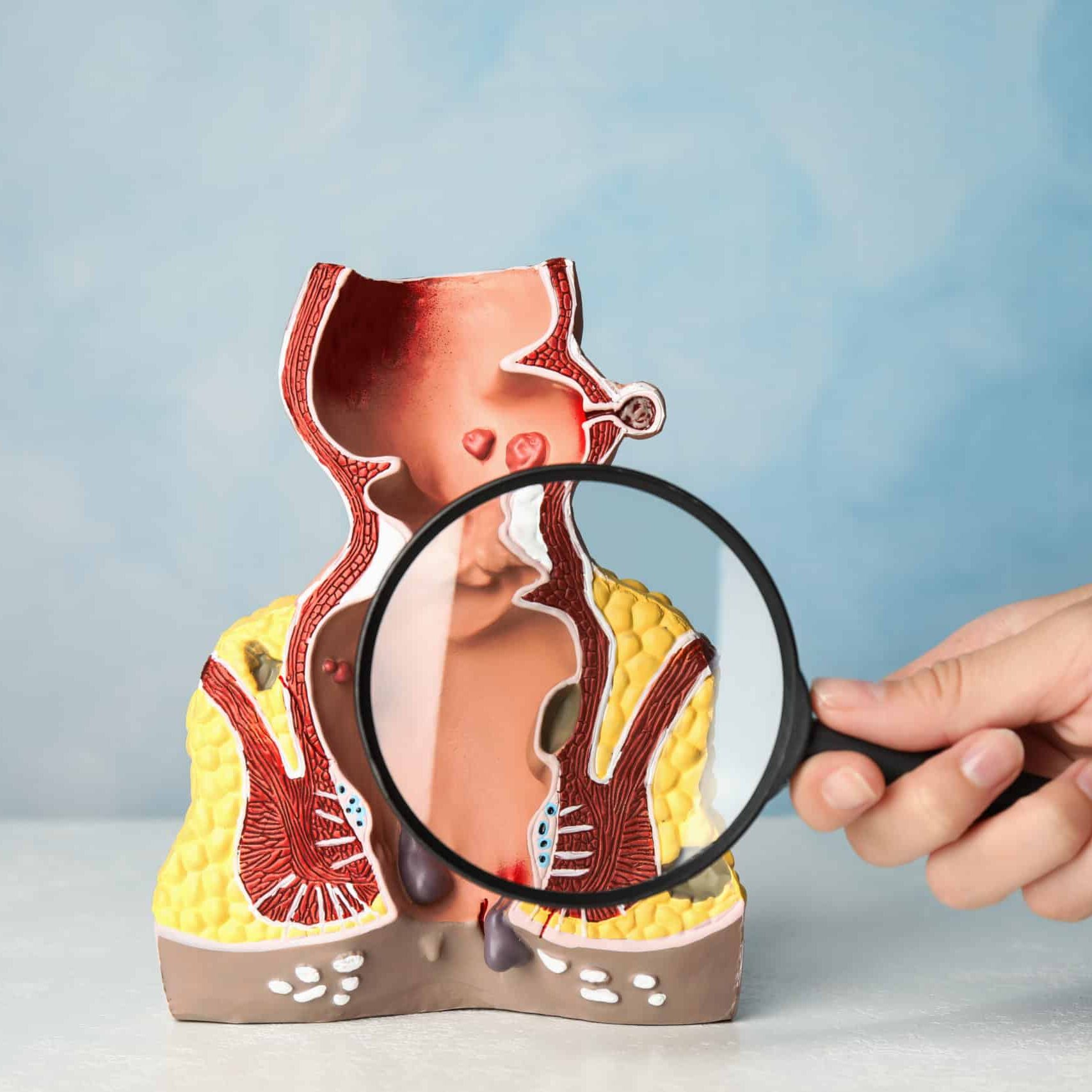
Anal fissures are small tears that occur when the tissue lining the anus is stretched too far. They can occur in people of all ages, and they are often mistaken for hemorrhoids. Anal fissures usually heal with conservative care, but ignoring their warning signs can prolong the healing process and turn a relatively minor acute problem into a chronic condition that may require medical treatment.
What Causes Anal Fissures?
An anal fissure occurs when the tissue lining the anus is stretched beyond its limit. The result is a tiny tear in the tissue– the most common cause of anal fissures is passing large, dry, hard stool, which can happen after bouts of constipation. Childbirth can also cause anal fissures, as can penetration from having anal sex.
The pain from an anal fissure triggers the anal sphincter to spasm and tighten, which can cut off the blood supply necessary to help the tear heal. The cycle of pain, muscle spasms, and a lack of blood flow occurs with every bowel movement, which slows down the healing process considerably. Treating an anal fissure generally involves disrupting this cycle so the tear has a chance to heal, which usually happens within eight weeks.
Signs and Symptoms of Anal Fissures
The most common sign of an anal fissure is a severely painful bowel movement. This pain has been described as sharp, cutting, tearing, or burning and can last anywhere from several minutes to several hours after a bowel movement. Most people with an anal fissure feel this pain, but not everyone does.
Other Signs of Anal Fissures
- Blood in your stool that may be visible on toilet paper or in the toilet bowl
- A burning or itching anus
- Minor pain when urinating
Anal fissures are often confused with hemorrhoids since the conditions share many of the same symptoms. The biggest difference between hemorrhoids and anal fissures is that anal fissures tend to be more painful.
About 90 percent of anal fissures cause pain, while many hemorrhoids can be painless. Additionally, pain from hemorrhoids is usually constant, while the pain from anal fissures tends to be episodic.
Anal Fissure Vs. Hemorrhoids: Key Differences
Because these two conditions share overlapping symptoms, they are frequently confused. The table below highlights the most important distinctions:
| Feature | Anal Fissure | Hemorrhoid |
|---|---|---|
| Pain level | Severe (≈90% of cases) | Often painless or mild |
| Pain pattern | Episodic — worst during/after bowel movements | Constant dull ache or pressure |
| Bleeding | Bright red, small amounts | Bright red, may be heavier |
| Visible sign | Tiny tear or crack in skin | Swollen vein or protruding tissue |
Treatment Options for Anal Fissures
The goal of treatment is to break the pain-spasm-poor circulation cycle so the tear has a chance to heal. Most acute fissures resolve within 4 to 8 weeks with conservative care.
Conservative (At-Home) Treatments
- Increase fiber intake — aim for 25–35 g per day through fruits, vegetables, and whole grains.
- Stay hydrated — drink 6–8 glasses of water daily to soften stools.
- Use stool softeners — OTC options can ease the strain of bowel movements.
- Sitz baths — soaking in warm water for 10–20 minutes several times a day relaxes the sphincter and promotes healing.
- Topical anesthetics or creams — can reduce pain and promote blood flow to the area.
Medical & Surgical Treatments
If a fissure does not heal after 8 weeks, it is considered chronic and may require intervention. Options include:
- Lateral internal sphincterotomy — a minimally invasive surgical procedure with a high success rate for chronic fissures
- Prescription topical medications (nitroglycerin or calcium channel blockers) to relax the sphincter
- Botulinum toxin (Botox) injections to temporarily paralyze the sphincter
Contact Arizona Colorectal Experts in Chandler & Scottsdale
Ready to find relief? If your anal fissure isn’t healing on its own, our board-certified colorectal surgeons are here to help. Dr. Patel and Dr. Hakiman welcome new patients and will work with you to find the most effective, least invasive treatment plan.
Fill out our online form or call us at 602-844-5157 to schedule your appointment.

ACE Clinic
ACE Clinic is proud to serve the communities of Chandler and Scottsdale, Arizona. We hope you’ll enjoy our comfortable, physician-owned practice dedicated to the highest level of patient care. Designed for your comfort and privacy, our facilities are welcoming and stocked to handle your care needs.